
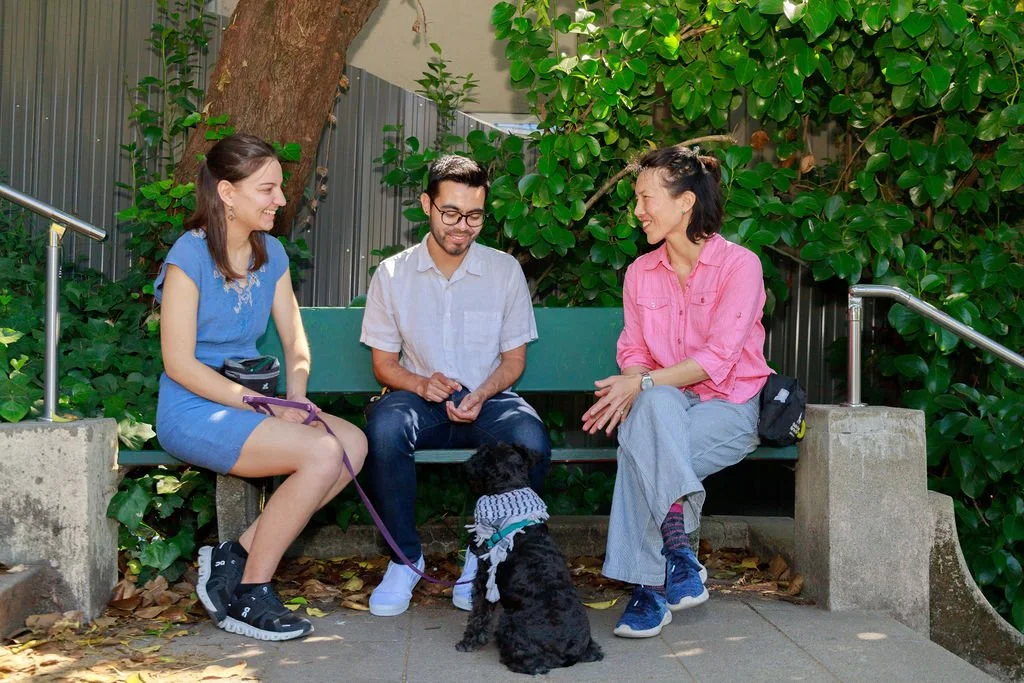
I chat with some clients and their adorable mini schnauzer pup after a training session!
You love your dog. You want the best for them—the healthiest food, the tastiest treats, the softest beds. You want the best dog trainer, too, but with so much conflicting information, how do you choose?
2 things you need to know:
Dog training is unregulated…
Unlike your doctor, lawyer, and CPA, dog trainers have no official regulating body. That means no required education, no enforced best practices, and no ethics oversight. The results are vast variations in dog trainers’ skills, knowledge, and methodologies–and a confusing chaos of advice.
…but dog training science is clear.
While the lack of regulation means trainers do not have to adhere to the science of behavior and training, the science itself is clear about how dogs learn and how best to teach them.
In fact, veterinary bodies worldwide agree that reward-based training is the safest, most effective way to train all dogs.
Now that you’re in the know, look for a dog trainer who:
Uses only force-free training
For your dog’s safety and your peace of mind, choose a trainer dedicated to force-free training. Reward-based training is the safest, most effective route to happy, well-behaved dogs of all sizes, breeds, and temperaments.
Makes the right guarantees
Professional associations and schools prohibit the unethical practice of guaranteeing specific training results. Your trainer should guarantee top-notch support to set you and your dog up for success.
Seeks ongoing professional education
Professional learning isn’t yet required, but real pros seek it out—because you and your dog deserve effective, up-to-date methods that do no harm.
Is honest and transparent
Real training results require time and effort. Be wary of quick fix promises and miraculous easy buttons. If it sounds too good to be true, it probably is.
Is dog and people friendly
You deserve to feel comfortable, heard, and supported by your dog trainer—never criticized or judged. If the relationship doesn’t feel right, trust your gut and keep looking.
Jung Fitzpatrick is this trainer.
Whether or not you choose to work with Pawsitive Training with Jung, please keep all of the above in mind as you search for an educated, effective, and ethical dog trainer. You can ask for referrals from your community but be sure to do follow up research on the recommendations you receive.
Here are a couple resources for finding professional and positive reinforcement dog trainers and cross-checking referrals:
The Pet Professional Guild (PPG) has a directory of pet professionals who pledge to PPG’s strict code of conduct which states, “No shock, No prong, No choke collars and No pain, No fear, No force are ever employed in the training, behavior modification, care, or management of any pet.” PPG is the only pet professional member association to have such a code dedicated to positive reinforcement methods.
The Fear Free Directory lists animal professionals who have certified with Fear Free’s programs. Fear Free’s mission is to “prevent and alleviate fear, anxiety, and stress in pets by inspiring and educating the people who care for them.”
When you reach out to the dog trainer, you can alway ask for client references to chat with other dog guardians who have worked with that trainer. This gives you the opportunity to learn more and hear directly from someone who has experienced working and training with that person first hand.
Jung is always happy to provide prospective clients with current or past client references.
