
Interview: Rossmoor Pet Hospital
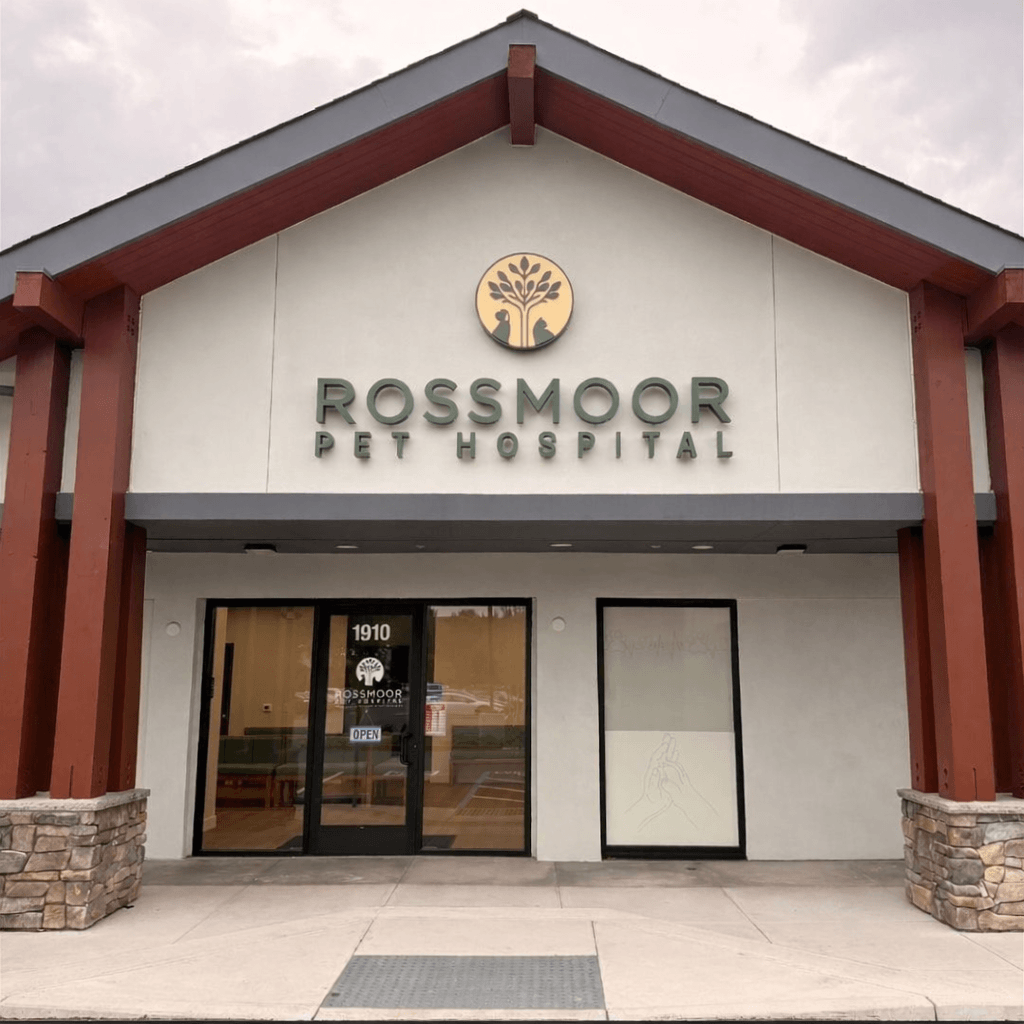
There’s a new veterinary hospital in my neighborhood!
I stopped by the Rossmoor Pet Hospital (RPH), which opened up in February, to introduce myself and learn more about their team, facility, and culture. My first impression of the RPH team is that they are very kind, grounded, and experienced, and that has been reinforced in every interaction. I offered to do a Lunch & Learn, which they took me up on in April. They were also very generous in granting me an interview in May. Here’s the conversation I had with Drs. Bikram Sohi and Jimmy Holtschlag, DVM, and LeeAnn Orlando, Practice Manager.
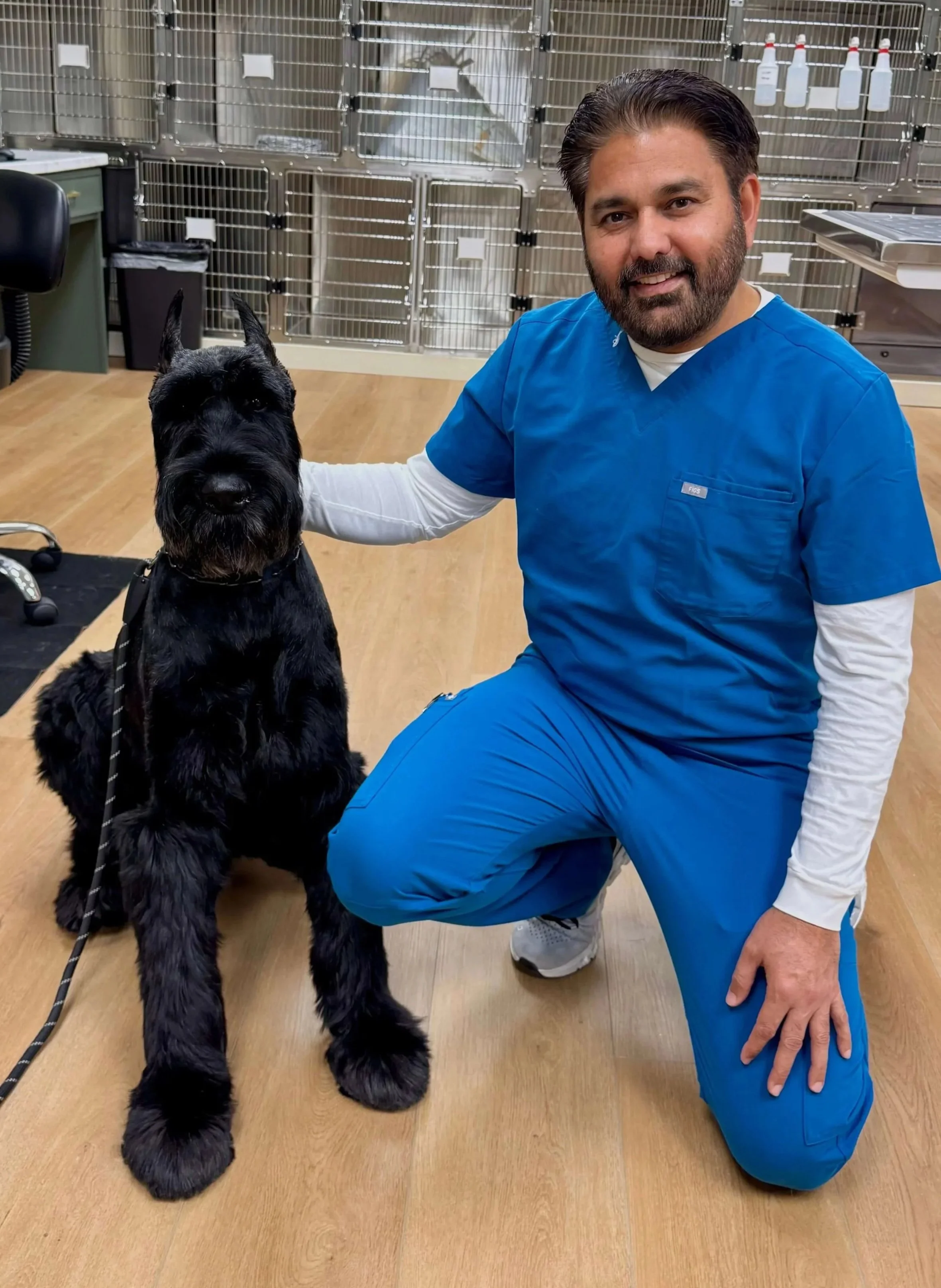
Dr. Sohi with one of his canine patients, Sulley. All photos courtesy of RPH.
Dr. Sohi, What experiences inspired you to pursue veterinary medicine as a profession?
Dr. Sohi: I grew up in India’s Punjab region on a farm, which exposed me to a range of complex interactions with animals and their environment. There wasn’t just one instance but rather many experiences that led me to choose this path.
Dr. Jimmy?
Dr. Jimmy [Everyone calls him Dr. Jimmy rather than Dr. Holtschag.]: I always liked being around animals and growing up we had dogs here and there. I always had the idea of helping animals in some way but I lost track of that goal during high school. In undergrad, I looked at law enforcement, kinesiology, and after some soul searching came back to veterinary medicine.
How about you LeeAnn?
LeeAnn: I always wanted to work in the medical field; I wanted to be a nurse. But with two kids at home, it was too much to keep up with schooling full-time. Studying veterinary medicine was a way to stay in my area of interest.
Dr. Sohi, you have quite the international background as a veterinarian…what differences have you observed among India, Australia, and the US in terms of how animal care is viewed and practiced?
Dr. Sohi: In the US, pets have the most elevated roles compared to any other country. Australia is much more family oriented than pet oriented. Americans talk more about their pets generally, and consider them family members. Of course, pets are considered part of the family in Australia too but the focus is more on family and not pets. Statistically, pets per capita or household is the highest in the States. Medicine is quite advanced in Australia but the way veterinary medicine is practiced is much more structured in the US.
India, interestingly, is somewhat between the two countries. It is growing really fast, changing from a society of extended to nuclear families, so pets are increasingly becoming more essential for general well-being. Culturally and spiritually, Indians consider their roles with pets and animals quite differently. People don’t feel like they have the right to make end of life decisions for other creatures. In India, veterinarians may perform three or four euthanasias per year.
LeeAnn: Unfortunately, veterinary teams may see multiple euthanasia cases in a single day. Some pet owners may also be unfamiliar with the process and assume euthanasia can be performed without an exam or discussion of aftercare options.
Dr. Sohi: We have a firm policy against convenience euthanasia. Behavior is one of the biggest reasons for euthanasia.
Wow, that is quite a contrast in euthanasia numbers and cultural perspectives. Dr. Jimmy, you’ve studied and practiced in the States. Have you noticed any differences between the places you’ve been?
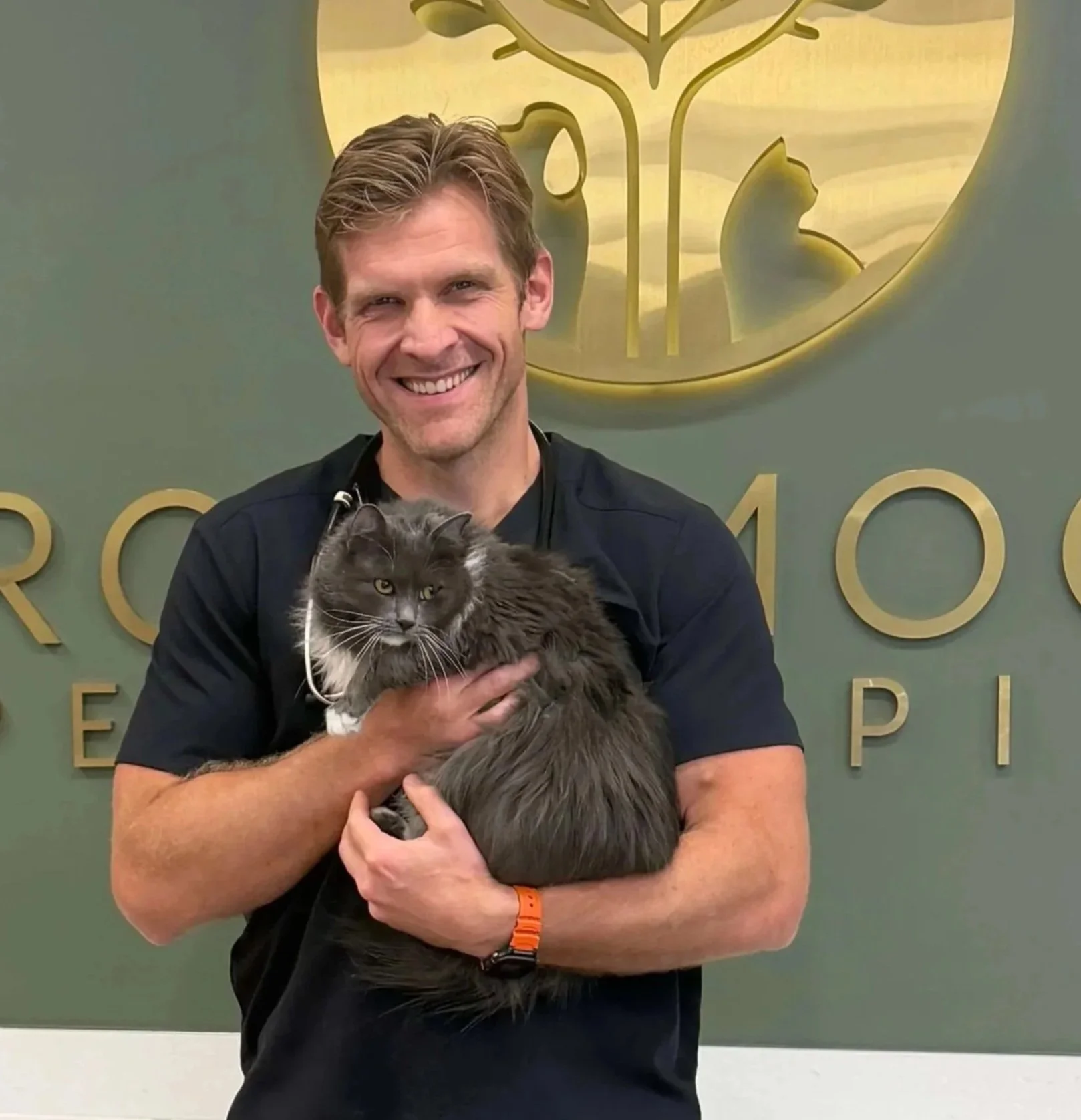
Dr. Jimmy with feline patient, Blossom.
Dr. Jimmy: I started out in Soledad, CA. I worked about 4 years with mixed animals - companion animals and farm animals, but not horses. Equine vet medicine is a whole specialty unto itself and horse people can tell if you did not grow up with horses! Some clients would bring their animals in but often I was traveling to clients and patients on farms and ranches. It was hard work but great work. We were the people’s only option in the area and it really accelerated my learning. I had to figure things out and take some chances, which gave me many opportunities to build my experience and cut my teeth on. The practice closed down, so I ended up at a small animal clinic in Salinas that is part of a much larger equine hospital. Not too far away from where I was before.
Salinas was a good environment for me to continue to learn. It’s a really tight knit community. Similar to here at RPH, I was the only veterinarian on staff for most of the week, so I continued to work through more complex cases. There I worked only with small animals - cats and dogs. I was there for 2 years before moving here.
There are a few differences I’ve noticed in coming to RPH. Here I’m helping to establish a new clinic and build all these new connections and trust with people. We want to make sure people know what our mission is here. The environment is also different. Contra Costa County is less rural than in Monterey County where I worked with more ranchers. Everybody here is pretty well educated. We’re also closer to bigger metro areas so there’s a distinct difference in lifestyles. I see plenty of happy dogs and cats here, living some good lives! There aren’t a lot of dogs hanging out in runs and cats are well pampered. Access to specialists is much better here too. I had to refer out more in Monterrey to Santa Cruz and San Jose. At RPH we have a specialty surgeon on staff here as well as access to traveling specialists that can perform endoscopy and rhinoscopy, among other operations. We have more options for emergency care here.
What makes the Rossmoor Pet Hospital a unique option for pet parents in the Walnut Creek area?
LeeAnn Our culture is different from other hospitals. Client and patient care are number one. We try to see everyone. We want our clients and their pets to be comfortable - it’s an experience to be here. Our clients love our pets and we love our clients. They think of their pets as kids. As a team, we’re all experienced and work well together. We have a good work flow.
Dr. Jimmy: We’re still forming our identity and not set in our ways. We’re able to adapt easier to the environment we’re in and to our clients to become a reflection of the community. We prioritize good conversation with the clients who come in and spend more time on education– showing and describing what’s going on in greater detail. It’s important to be on the same page. I don’t want clients to leave not knowing why we chose the particular treatment or diagnostic procedure. I want them to feel empowered by the choices they made with our counsel. We have more options for long-acting preventatives and medicines, which is helpful for improving the quality of life for our clients and patients. It also helps our clients maintain consistency in treatment of their pets on their own at home.
Dr. Sohi: We’re very transparent about pricing. The owner is part of every part of the decision making process and we act as guides for our clients to make the best choices. We also operate on the “Gold Standard of Care” Policy. Right off the bat we work by the book with our clients and figure out together what’s doable today based on their budget. Our strength is that we use a tailored approach with our clients and pet patients and are flexible in accommodating their needs. We take walk-ins and provide urgent and emergency care. While we’re not 24/7, we have a partnership with Pacific Veterinary Emergency for overnight emergency care. We also have a visiting radiologist and board certified surgeons who are able to provide advanced testing for our patients on-site.
Currently we’re also offering some special dealsto support our local community: a free exam with any treatment for Rossmoor residents, 50% off exam fee for all first-time clients, a promotion on dental cleanings, and a referral reward program.
What is the difference between urgent care and emergency care?
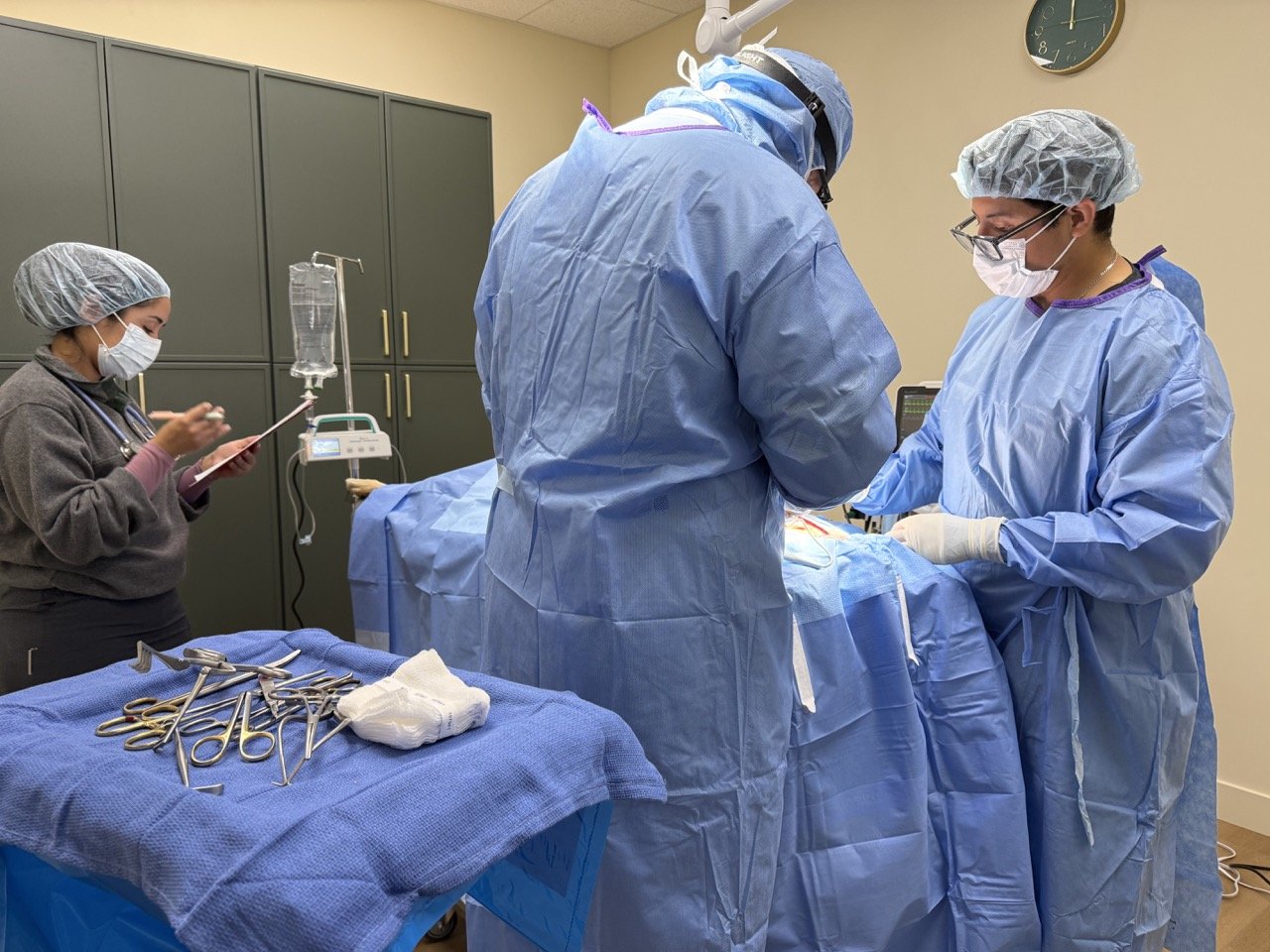
Dr. Jimmy: Urgent care is when a client needs patient care within our business hours. The patient has a “day-of problem.” Our doors are always open for urgent cases although a call ahead is always helpful. We can review, triage,and stabilize the issue. Emergency care is when the patient needs hospitalization overnight because the situation is life threatening. At times an urgent care appointment can turn into a referral to an emergency hospital due to severity of the issue and level of care needed.
What do you love about being in veterinary medicine?
Dr. Jimmy: Oh everything! I like fixing things. I enjoy being able to see what we do here, make improvements in our patients and client’s lives. I enjoy the education and communication aspect of the work, which I wasn’t sure I would be when I was in school. But that has changed as I gained more experience and confidence in my work. I enjoy it because it helps empower my clients to help their pets.
Dr. Sohi: I love easing suffering and adding to the quality of life for each pet and client. That is the whole basis for our work.
LeeAnn: I like to take care of everyone - clients and patients, staff, doctors.
You’re a mother hen! What is your favorite case or type of client that you enjoy working with?
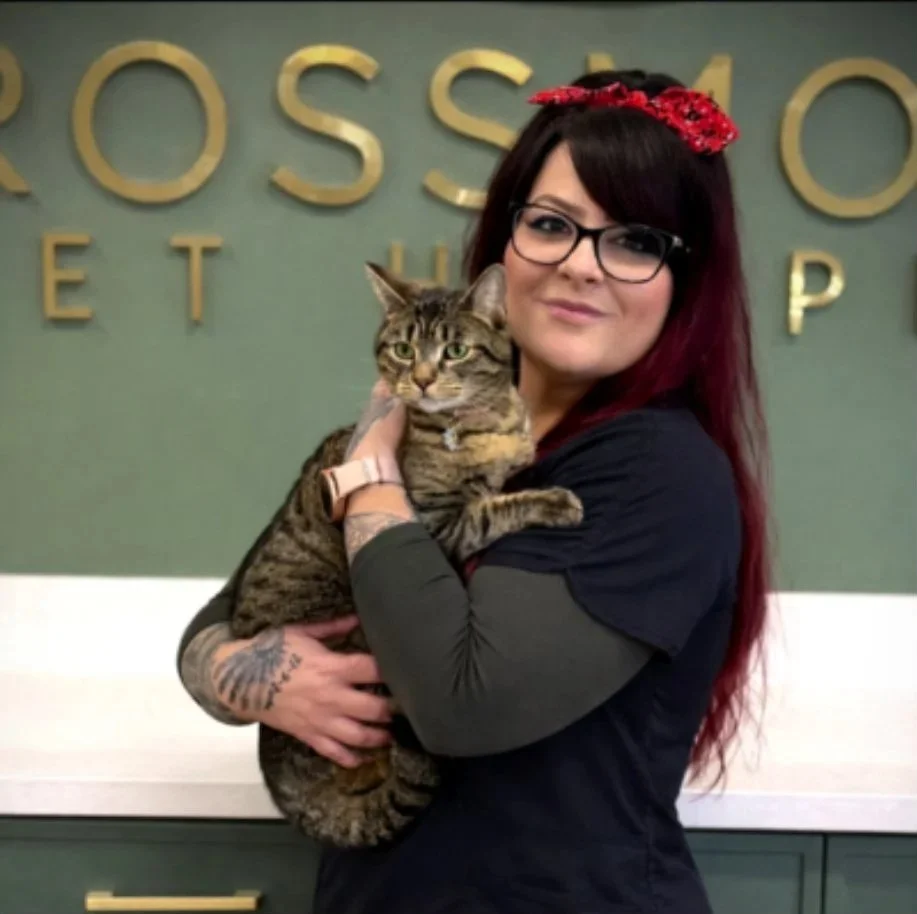
LeeAnn, Practice Manager & Crazy Cat Lady, holding feline patient, Annie.
LeeAnn: Cats! I’m a crazy cat lady!
Dr. Jimmy: I used to really love any kind of critical surgeries like a stomach or intestinal foreign body surgery, bladder stone removal, etc. because it was a mechanical fix with a quick response. It still holds a high place on my list but I think now, I like going into an appointment and going through the education and investigation of a pet’s health issues with the clients. I love seeing the pieces fall into place for my clients. From there, we can come to a diagnosis together, figure out the treatment we want, and see the treatment work. That has become very rewarding.
Dr. Sohi: Clinically, I love internal medicine, dermatology, and surgeries. My favorite clients are easy-going and want to do the best for their pets.
What is the most challenging aspect of being a veterinarian?
Dr. Jimmy: Empathy burn-out or compassion fatigue happens when we see problems we can’t fix, and there’s no resources for support and it feels helpless. Thankfully, I don’t see it as much here, but that can be a real struggle.
LeeAnn: Compassion fatigue is a real problem. In the US, veterinary professionals are at the highest risk of suicide compared to other medical professionals. Understanding that we don’t have control over most of the factors influencing a pet’s health, keeps our expectations more realistic - that we’re here to ease suffering and not take on the burden of the responsibility. In one day we can go from performing euthanasia in one appointment to treating a happy puppy in the next. Emotionally resetting and switching like that all the time is hard on professionals. And then there are the occasional irate clients.
Dr. Jimmy: Oftentimes an answer used for this question is euthanasia. The thing with that is it can be a very useful treatment in our arsenal. We can get to a point where we can’t help the pet anymore. Hospice care for animals is not up to the same level as it is with humans. We still struggle to manage suffering for our pet companions. It is always tough to say goodbye but it can be a valuable and humane tool. I don’t love saying this but it is a last gift of sorts. Dogs and cats will live for as long as you want them to - they will suffer to survive if the humans want them to live longer but it’s not always the best for the pets.
Dr. Sohi: It’s harder to get into veterinary medicine - less schools, higher competition - and students have to learn a lot more than in human medicine because they’re expected to be able to treat all types of animals.There is also a higher debt to income ratio for veterinary professionals than in human medicine.
LeeAnn: Veterinary professionals don’t get enough credit and respect; vet techs do a lot because they have to be generalists.
Dr. Sohi: In veterinary clinics, staff don’t necessarily have the luxury of only practicing one type of skill such as being a respiratory nurse, geriatric nurse, etc in human hospitals. The veterinary profession is generally underrated and under esteemed.
I have such a great staff that keeps everything running smoothly. What’s challenging for me is when I know what the pet needs - diagnostics and treatment - and the client can’t do it. The conflict between what is practically possible and what the Gold Standard of Care is. I know I can help the pet, but the owner can’t afford the treatment.
LeeAnn: Everyday is challenging. There's always something different with the patients and clients and their needs. My role is to advocate for everyone - for staff, docs, clients, and patients who don’t talk. I also have to trust what the client shares.
How do you see pet training as a partner in vet medicine?
Dr. Sohi: Every pet needs training. A pet with basic obedience training and a guardian who understands their pet’s behavior adds to the quality of both of their lives so much. Both are more confident.
Dr. Jimmy: Pet training is a huge part of vet med. A well trained dog makes our jobs easier. Makes the clients and pets’ lives easier. We can only do so much for behavioral issues as far as investigating the medical origins of a behavior. Even if it gets to the point where they need pharmaceutical intervention, training needs to be part of the equation. Trainers also often pick up on things that are important for us to know that an owner might miss.
LeeAnn: Pandemic puppies were the worst! (They did not get enough social interaction with other animals like they normally would.)
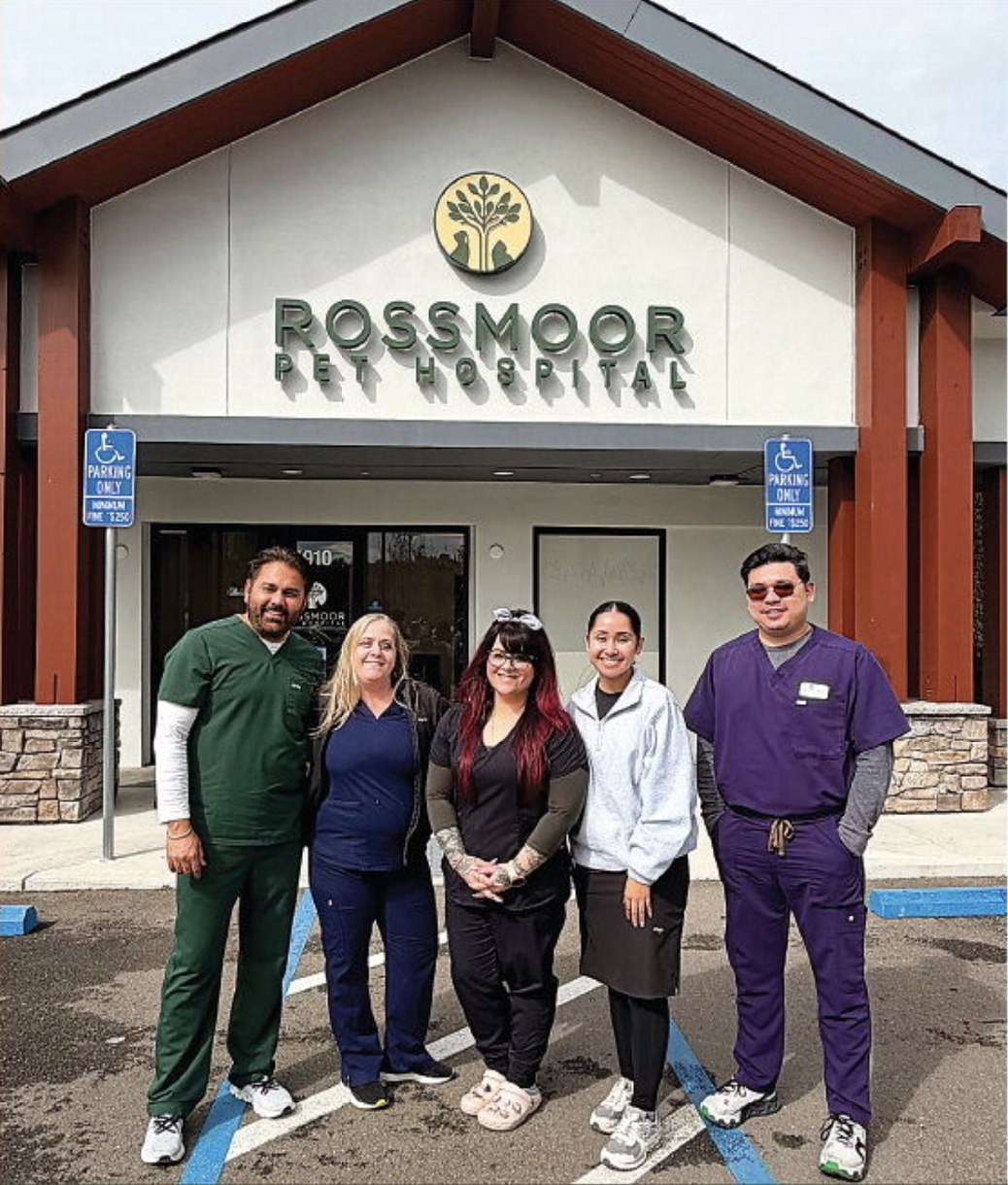
Dr. Sohi with some of the RPH team.
What advice would you give to a pet parent when choosing a veterinarian?
LeeAnn: Try to get a feel of the practice - does the practice really care for their pets and well-being? Does it offer the best medicine which every pet deserves? Is the practice flexible according to what is doable and practical in deciding what is best for the pet? Is the practice treating the clients and pets as numbers or individuals?
Dr. Sohi: LeeAnn is the front line for our team and has worked at other practices. Her views on this are valuable.
LeeAnn: Also, what are your first impressions? Do the staff look miserable? How are they when they greet you? Are they happy and friendly when they answer your questions? Does the practice offer “happy visits” to just check out the lobby and practice with your pet? Here we have treats to create a positive association for a pet when they come to visit us.
Dr. Jimmy: Look for referrals. Ask the people who’ve been to the clinic. Meet the vet. You can price shop or go to Yelp, but that’s not the best way to figure out who will be a good fit for you. Someone has one bad day, and that translates into a terrible review for a practice. Be sure to do a first-person investigation. You can look for certifications but there can be very limiting requirements. Certifications often take a long time to get and can be expensive. Some clinics can be certified but not actually practice what the certification represents.
If you could change one thing that every pet parent does, what would it be?
LeeAnn: Pet education and preparation - understand what you’re getting into when you get a pet - species, breed, lifestyle, what your pet is going to need and related expenses. Pets are not just a cute companion; you have to take care of them. You are their sole advocate. We see some clients who only have time or money to take care of one but have four pets! There are a lot of advancements in vet medicine with diagnostics and treatment but ultimately, it’s your responsibility to take care of your pet. Spay and neuter your pet. It’s not just about population control but also great prevention for common health problems.
Dr. Sohi: What LeeAnn said!
Dr. Jimmy: I agree. Whenever anyone is planning on getting a pet, they need to do their research. It feels like more people are doing that these days and in this area. Another thing would be making sure to come to an appointment prepared; knowing why we’re there, what is needed, and what questions need to be answered makes the appointment move smoothly. There’s an old, ongoing joke in the Vet Med world: One partner makes an appointment, sends in the other partner with a pet and they have no idea what is going on. Basically, it used to be that one person in the family took care of the dog and knew the dog intimately. In this joke, we assume it’s one person taking care of the pet and the other has no idea what’s wrong. They don’t know what the dog is eating, which meds it’s taking, etc. That said, that has not been my experience here. Pet parents in this area are very invested in their pet’s health and lives and much more engaged and aware of their pet’s needs and well-being.
Last question, tell me about your pets!
Dr. Sohi: We have an 8 year old golden retriever, Simba, and a 6 year old Leopard Gecko, Rambo [top first two photos below]. Our son loves animals and wanted this species for a pet so we told him, ”You have to do all the research and understand how to care for it! We’ve had Rambo for about 2 years.
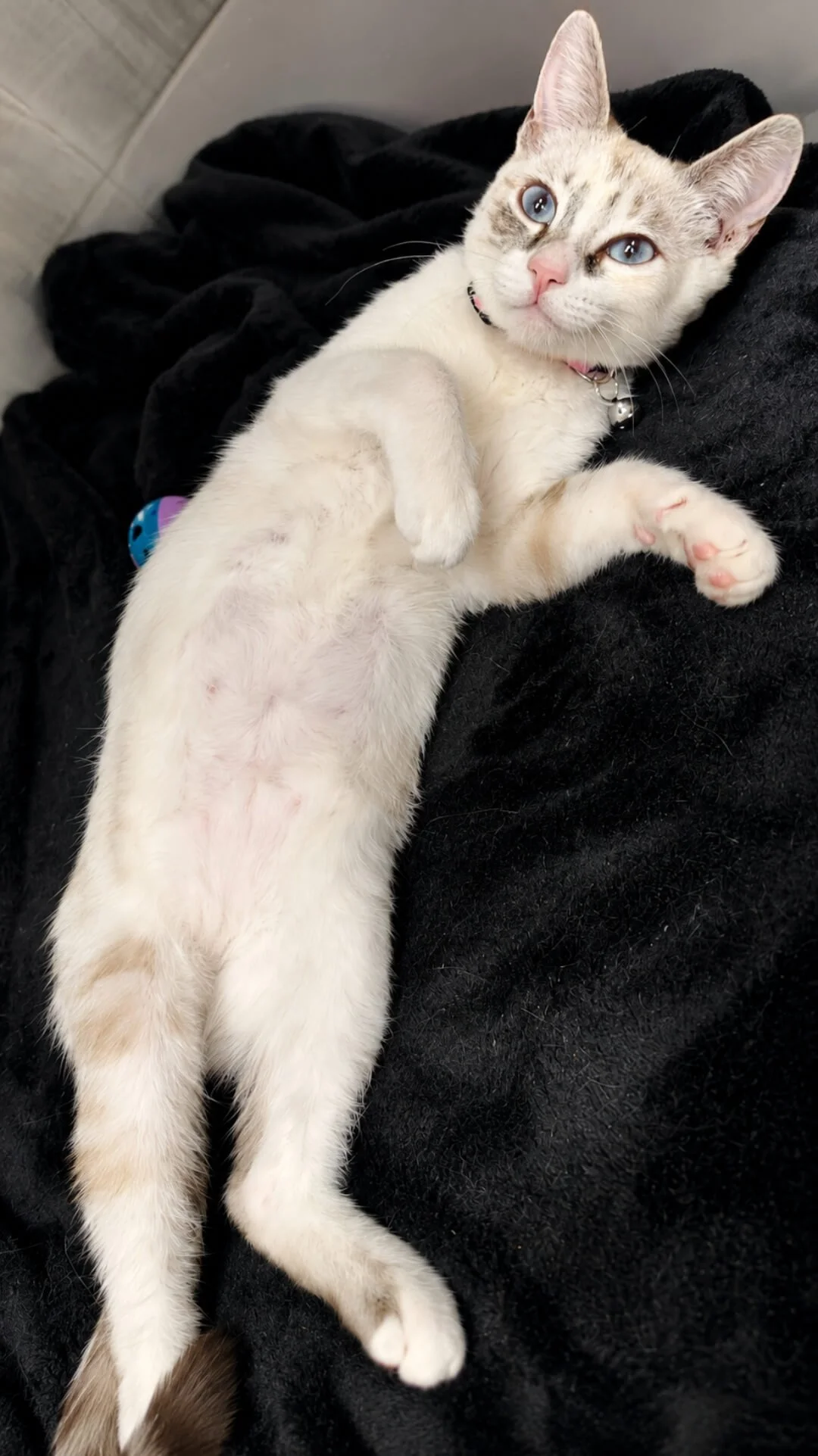
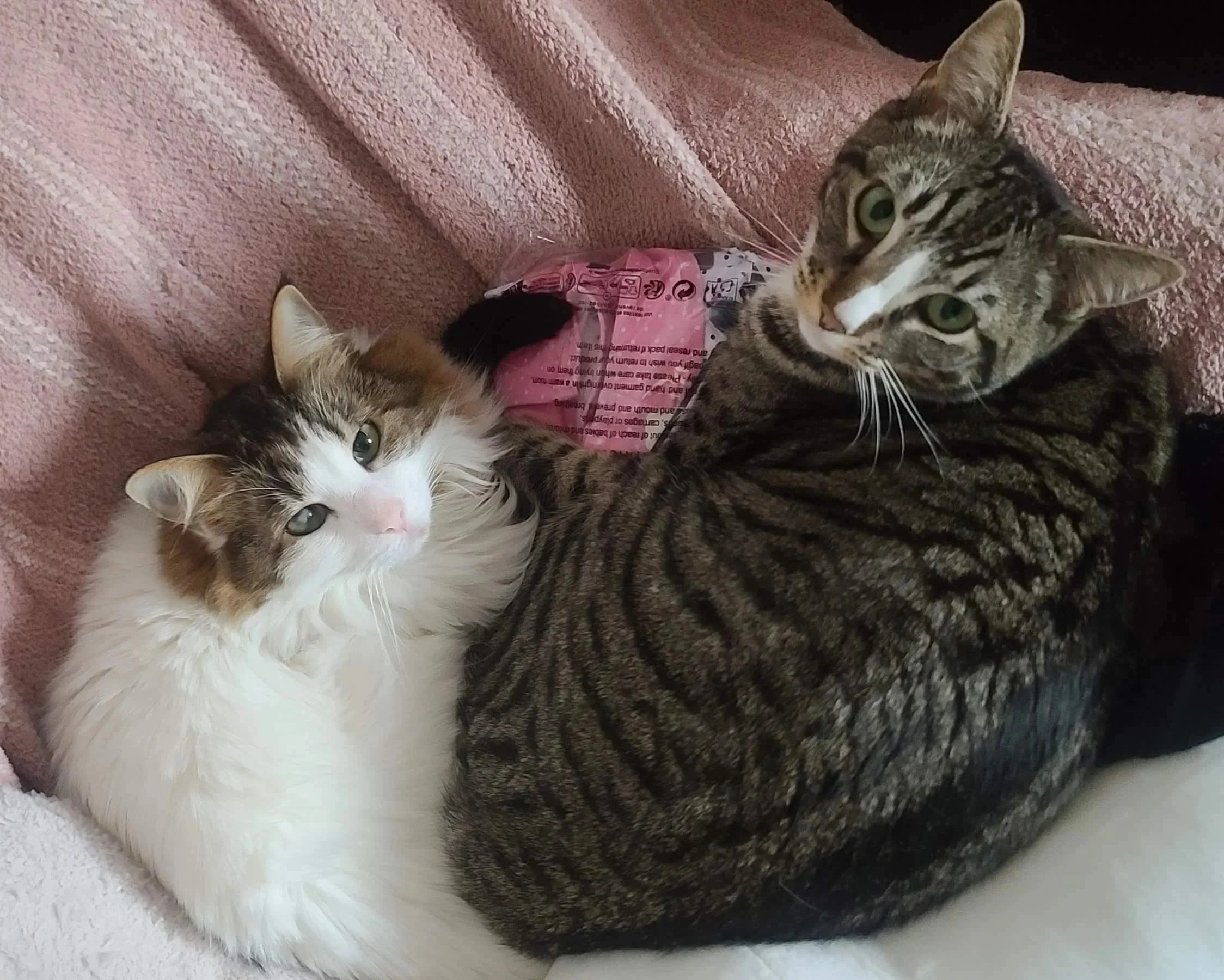
LeeAnn: I have 2 cats. Lulu is special needs. She’s blind in one eye with a heart murmur and going to be 6 years old at the end of May. She and I have the same birthday so we were meant to be! Luca is my 3 year old male terror [photos below].
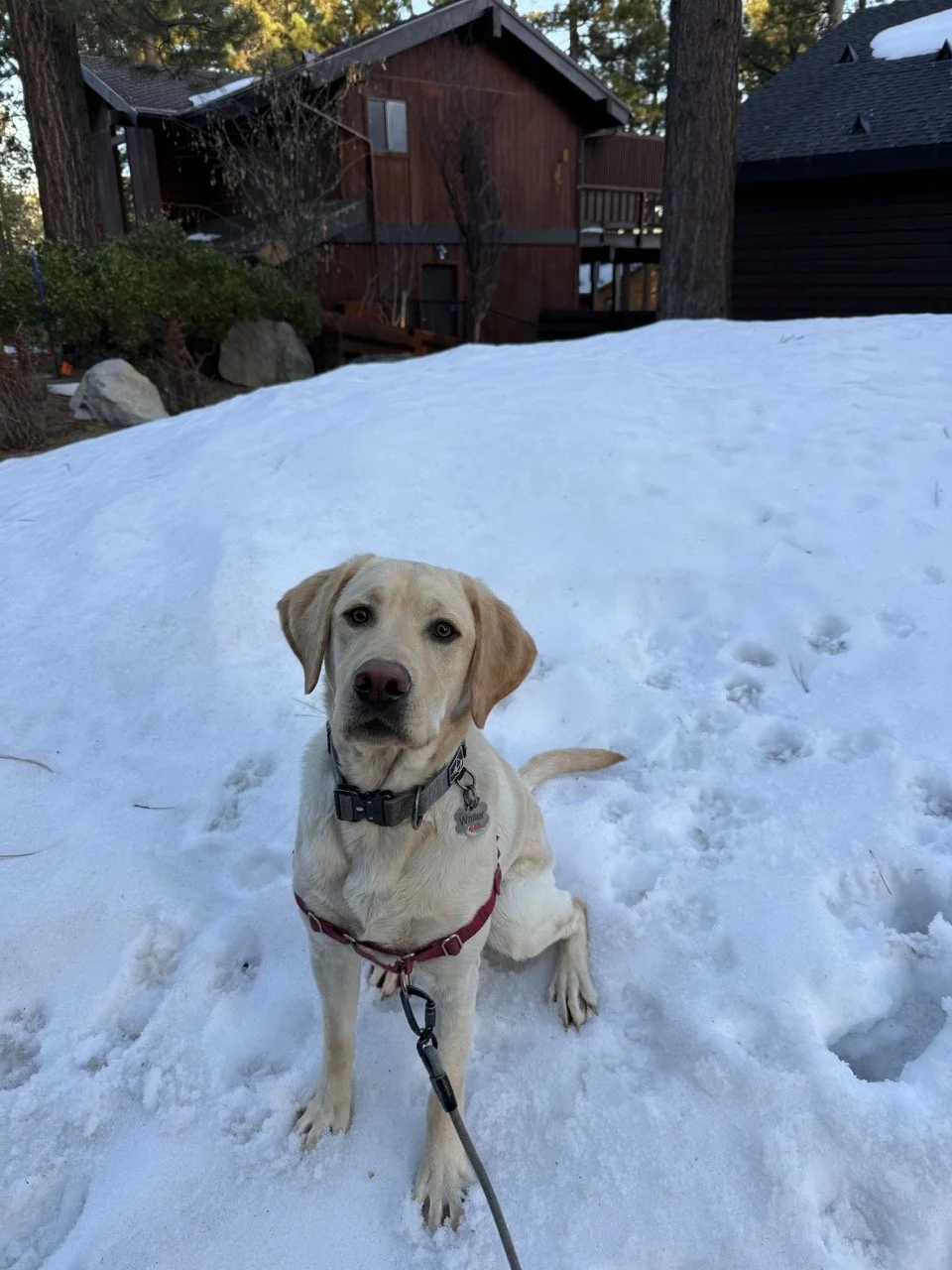
Dr. Jimmy: Walter is our half Standard/ half English Labrador who is 1 year and 2 months old. [He was sitting with us for the interview! Photo of him in the snow below.] Felix is our 9 yo Boxer mix, old man. And we have three cats: Flea, a 3 yo tuxedo female, Farley, a 2 yo medium hair brown tabby, and Sid, a 1.5 yo female who is an off- white mix.
Flea and Sid came to us from work. Flea was presumed dead when she was brought into the vet clinic where my wife worked (also a small animal vet). She had not moved for 2 days and was covered in fleas. We took her home as a foster to give her comfort and she bounced back. Sid was chased by a pit bull into a trash can with water. When she came into the clinic, it looked like she was covered in blood, but thankfully had not been bitten. We also ended up keeping her!
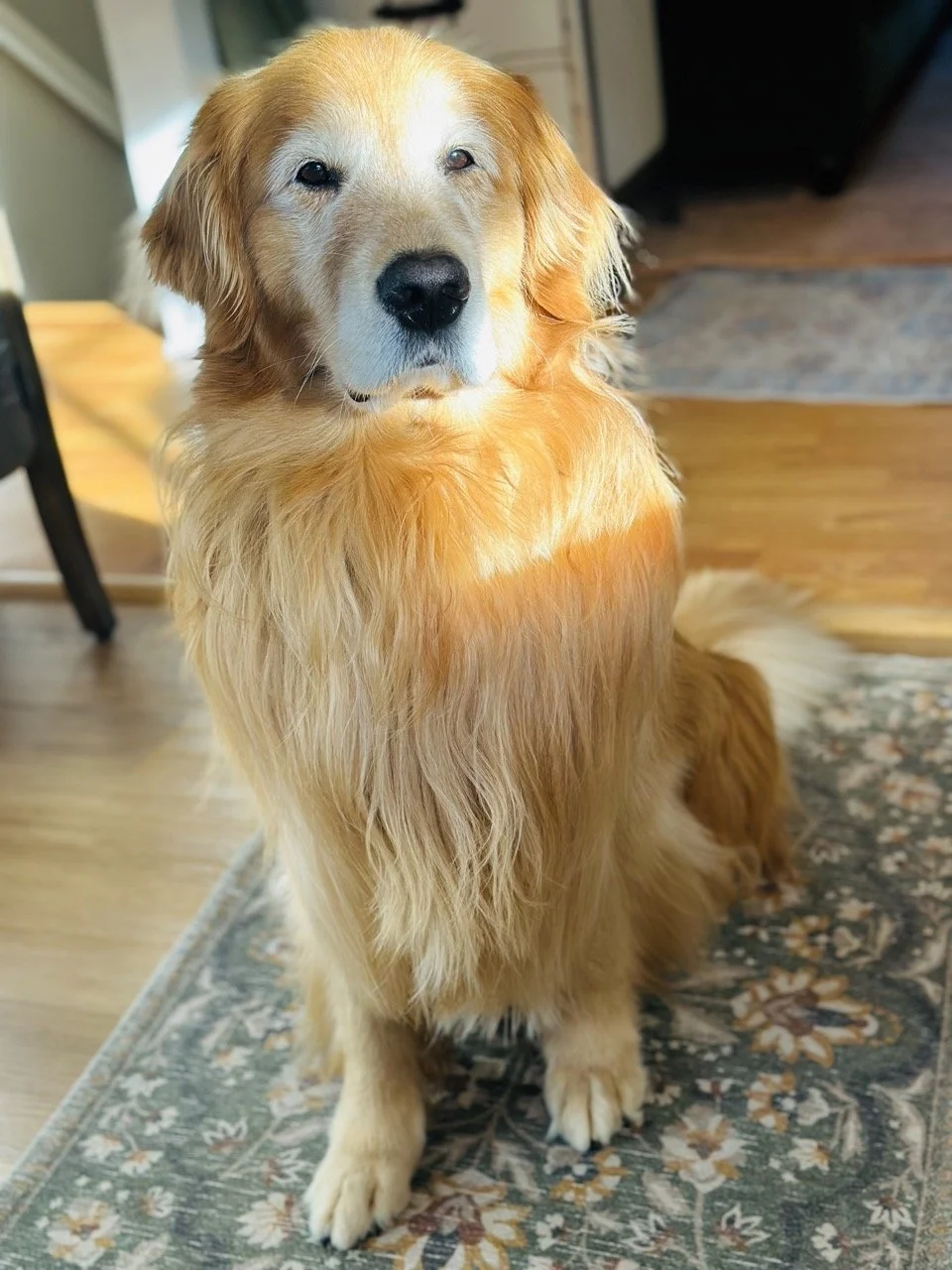
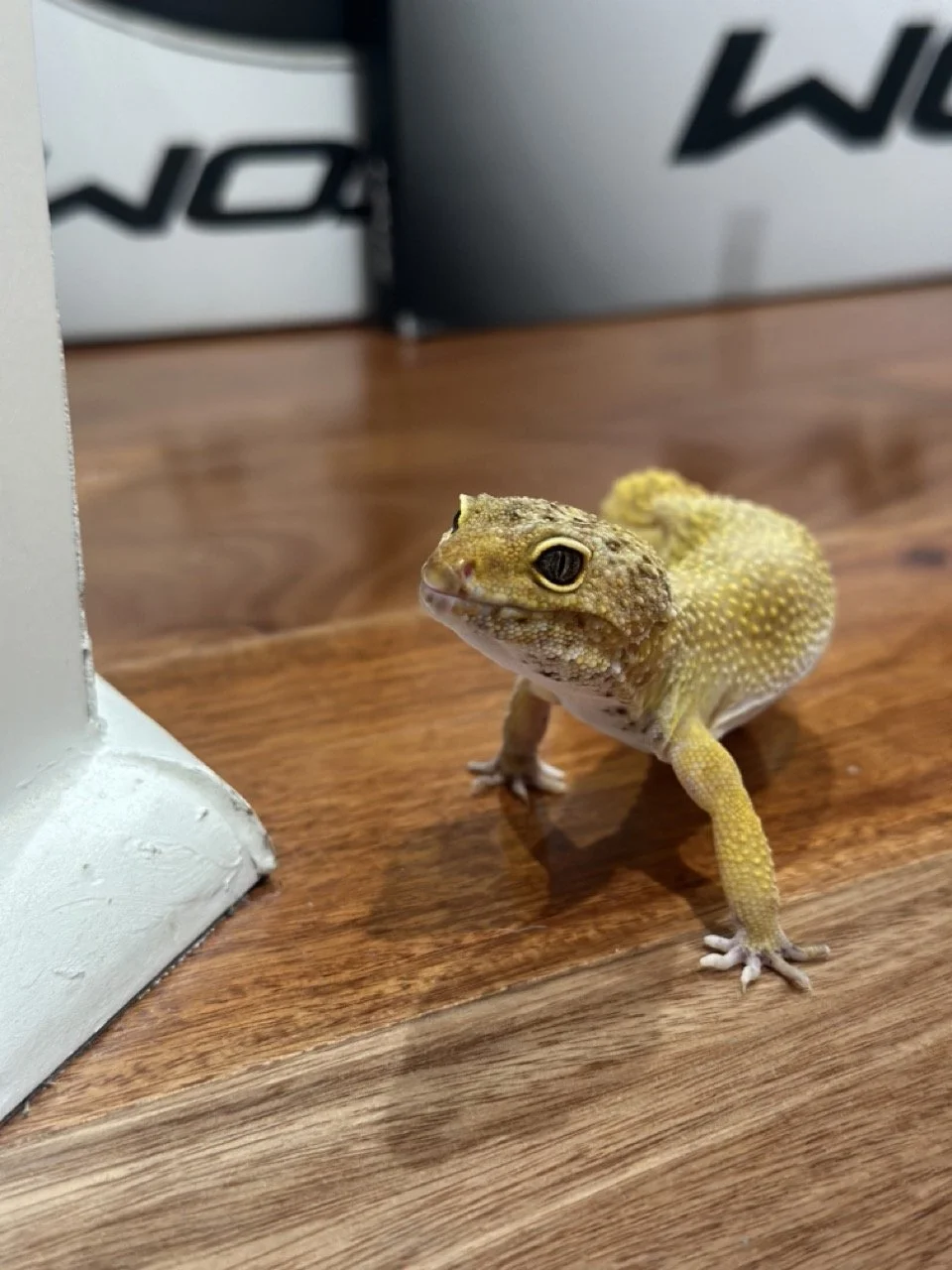
Thank you so much for spending time with me and answering my questions. I enjoyed our conversation and appreciated gaining more insight into your work. I’m so glad you’re my neighbors and a new member of our community.
If you visit RPH, please let them know you heard about them from me!
