
Why is My Pup Leash Reactive?
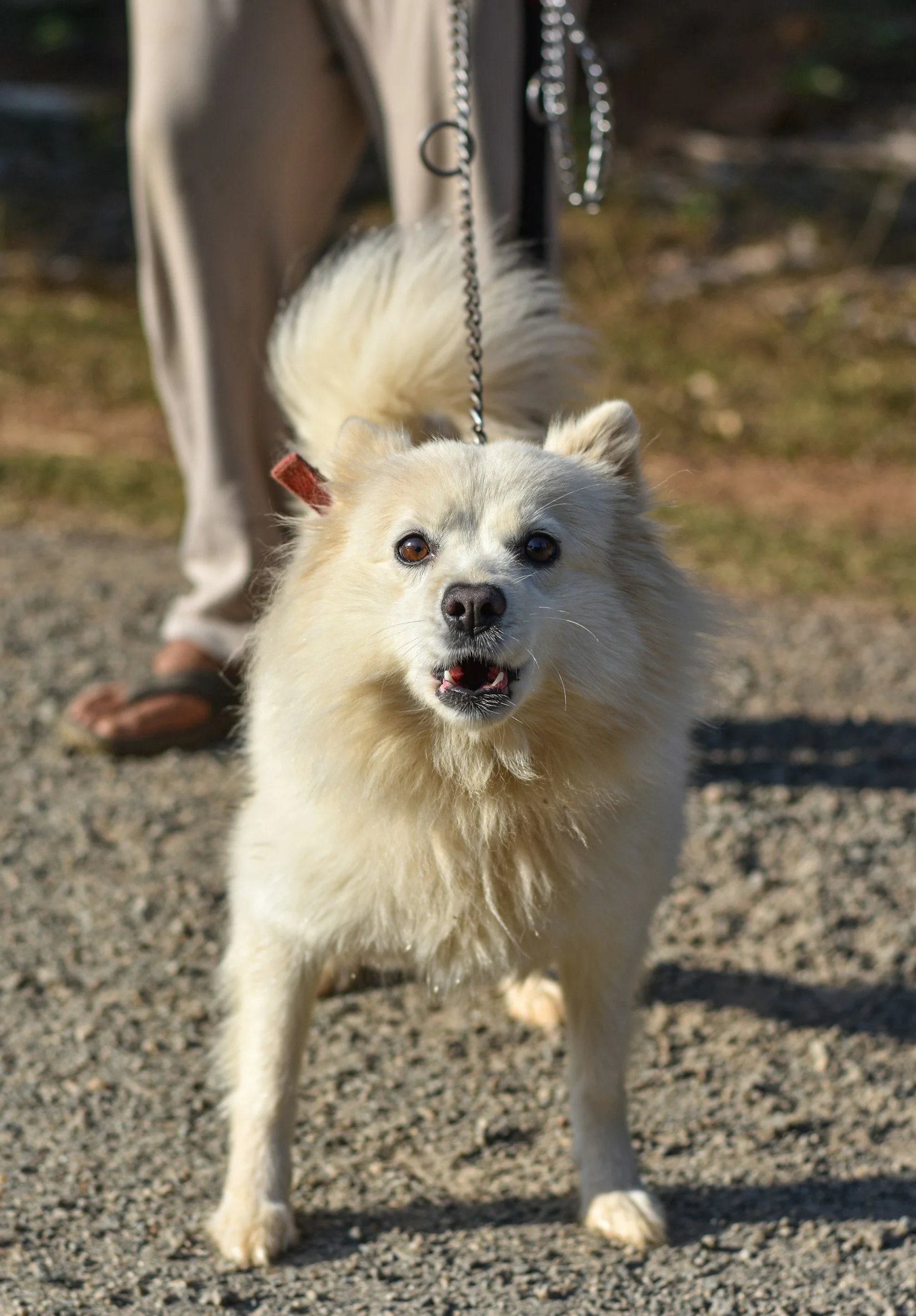
“My dog only acts that way - barking and lunging - at other dogs, when on leash! But at the dog park, she’s fine!”
“My pup freaks out when people approach her and we’re walking outside, but at home he’s a total love bug. I don’t get it.”
If either of those two statements sounds like something you would say about your pup, then this blog is for you. As a trainer, when I work with clients, I always ask them to describe the behavior, however they have labeled it - “reactive,” “stubborn,” “bad.” That helps me better understand what they are actually experiencing and to have a starting point for where we are and where we want to arrive.
Labels such as “reactive” are very general - they can be useful shorthand when talking - but they don’t tell me what is actually happening for the dog. Some common descriptions of “reactive” behavior are: barking, pulling, lunging, growling at stimuli such as dogs, people, or moving vehicles (including skateboards and bicycles).
I generally see two types of “reactive” cases - dogs that react or behave in a seemingly “aggressive” manner because they are either 1) fearful of or 2) excited by a trigger or stimulus. But reactivity does not mean a dog is aggressive. So if the dog isn’t aggressive, why is she “reacting” that way?
Let’s talk about how socially skilled dogs will meet off-leash. They will demonstrate Proper Dog Greeting Etiquette by:
Approaching in a curved manner with loose bodies
Keeping direct eye contact brief
Sniffing each other’s rear end first
Then moving towards the other’s face and nose
Having the freedom to move away from each other (not on leash)
Having time to process what they’ve gleaned from sniffing each other
And finally deciding whether they want to continue engaging (play) or not (walk away and do something else)
Now let’s compare that to when you’re walking your pup on leash and meet someone else with their dog on leash:
You’re most likely headed straight toward each other
Because of this your dog has no choice but to look at the approaching dog directly and often, perhaps for an amount of time that is uncomfortable for them depending on how far or close you are from the other person and how quickly you’re approaching
Your dog is limited in his freedom of movement because he is tethered to you by a leash, which is between 4 - 6 ‘ for most people
If you continue forward, your dog also must move toward the other dog, and if you’re on a narrow sidewalk sandwiched by a fence and parked cars, he may have less space to navigate around/avoid the other dog
There may be tension on the leash if either you or your dog are pulling (usually both of you are), which also means tense bodies moving towards each other
If your dog is older or challenged physically or health-wise, his body language may also be stiffer and read as less friendly to an oncoming dog
All of the above will most likely be true for the other person and their dog unless they are savvy around reactive dogs. Now see how all of the above lines up with Dog Body Language 101 says that:
Direct approaches are threatening
Direct eye contact is threatening
Prolonged eye contact is threatening
Feeling tension leads to more tension
Dog greetings on leash are unnatural for dogs. Some dogs are more aware of this improper etiquette because they are highly sensitive in general, aren’t well socialized to other dogs, have not been trained to greet on leash calmly, and/or are not well managed by their guardians. Seeing another dog on leash can cause a lot of anxiety and fear, or on the other hand a lot of excitement and frustration for “reactive” dogs.
So back to the original question: Why is my dog barking and lunging when on leash?
For fearful dogs, they are warning the other dog and person to stay away and give them more space:
Bark: stay away!
Lunge: I mean it, stay away! I’m making myself as big and scary as possible for you to get the message!
Unfortunately, for small, cute dogs this behavior can be funny or laughable to the humans.
For dogs excited to see other dogs, they are communicating they want to meet:
Bark: hey, over here!
Lunge: I’m trying to get to you faster!
Unfortunately, for big dogs or dogs with big barks, this can sound and look scary even though they actually want to greet.
For all dogs, vocalizing and lunging are often the only means of communication they have on leash. Unfortunately:
most humans don’t always understand or respect what is being communicated by the dog, both the “reactive” dog’s parent/guardian and the approaching person with the other dog; and
the “reactive” dog on leash has no control over or very limited control over their own movement towards or away from the oncoming dog.
When I’m working with my clients, it’s important for me to understand whether the “leash reactivity” is more fear or excitement based.
If it’s fear based, I call it more “leash anxiety” because the dog is more worried/nervous/afraid/concerned about meeting another dog or person when on leash. They may lack confidence around meeting strange people and dogs. They may have had prior experiences with meeting on leash that weren’t pleasant, or worse, were traumatic.
If it’s excitement based, I typically call this “leash frustration” because the dog is frustrated by not being able to greet the other people or dogs. They are limited by their handler and the limited freedom of the leash.
I never call this “leash aggression” because that label makes the dog sound dangerous, when the number of actually aggressive dogs (has a history of serious bites - puncture wound, bleeding- and going after others with the intent to bite) is quite rare, and the dog is likely not hostile or a serious physical threat to anyone.
Regardless of the basis of the behavior, it is often stressful, annoying, and/or embarrassing for the guardian. And in most cases, it is fairly easy to learn how to manage or train for a different outcome and behavior.
The majority of my work in dog training is actually training the people :) I educate my clients to better understand their dog’s behavior and improve their communication skills with their dogs. I teach them how to safely and proactively manage their dog out in public as well as train better leash walking and “reactive” skills. Improved communication between my clients and their pups coupled with learning effective and practical strategies and tactics for walking together builds confidence and a feeling of safety for both the person and the dog. Ultimately, I train my clients and their pups to work better as a team when they’re out in the world together, which reduces or eliminates the original reactive behavior.
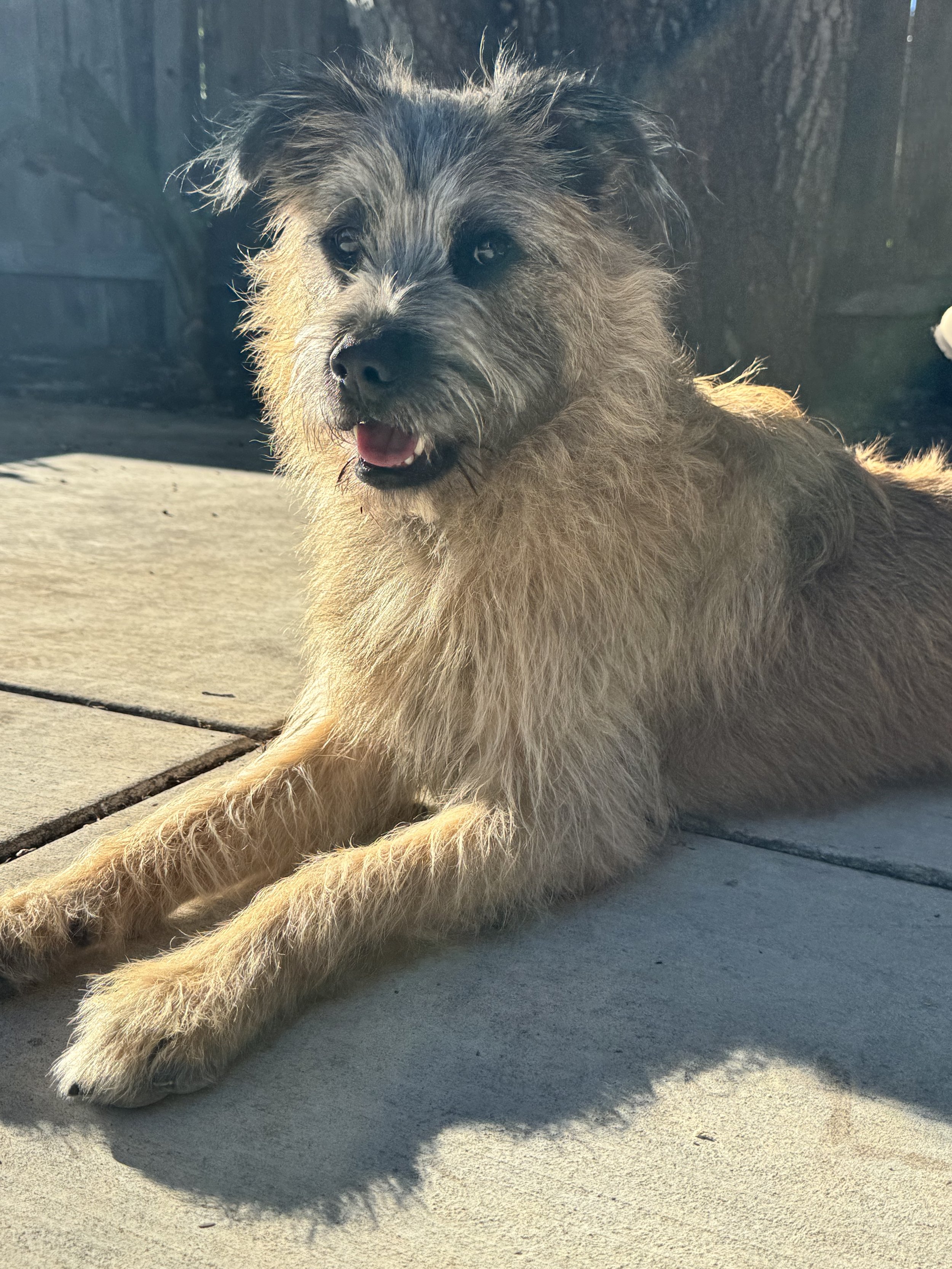
Ripley, an extremely energetic and dog social pup who displayed leash frustration when she saw other dogs she wanted to meet.
“We’ve had such a fantastic experience working with Jung! She’s been instrumental in helping us with our two dogs, Murphy and Ripley, including reactivity with other dogs, leash frustration, and leash pulling. Ripley, who is extremely energetic and easily distracted, has made great progress thanks to Jung’s calm, patient, and positive approach. It has made all the difference and it’s clear she genuinely loves working with dogs (and the people who love them!)”
